
About VertexWare
VertexWare OÜ is my software company, registered in Tallinn, Estonia. You work with me directly, in English, German, or Spanish.
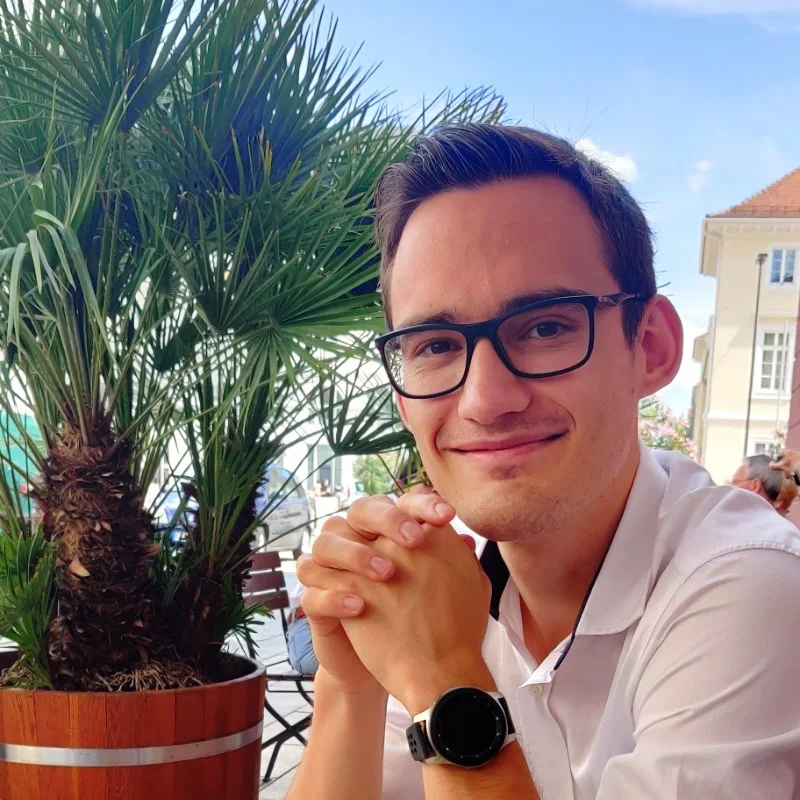
Background
Before VertexWare, I spent four years at the manufacturer Kleiberit as a software developer in a dual study programme. I redesigned the resource-ordering workflow, built role-based access for more than 500 employees, digitised laboratory records, and maintained a legacy BBJ application.
Since 2023, I have worked through VertexWare on SIB-BW2, a public-sector application for managing street infrastructure. I built about 30 of its reports, and report generation is now roughly 60% faster. I also developed the main migration tool for the ASB-ING standard, which still moves thousands of structures (Bauwerke) as needed, and I work on the move from Java 8/Karaf to Java 21/Spring Boot.
Alongside the code, I write the technical documentation and handle stakeholder communication in German.
My personal siteHow I work
- Scope. I write down the scope and assumptions before development starts.
- Testing. You test small working versions before I move on to the next part.
- Handover. You receive the agreed source code and documentation.
- Maintenance. After launch, I hand the application over or keep maintaining it under an agreed support arrangement.
- Specialists. I write most of the code myself. When a project needs expertise I do not have, I bring in specialists I have worked with before.
What I run myself
This site, LIMS by VXW and its public demo run on three servers in the EU that I set up and maintain: two virtual servers and one dedicated machine. Every code change goes through an automated build and deployment pipeline (CI/CD) that ships it as a Docker container, with build limits so a new deployment cannot slow down the apps already running. The LIMS demo resets its data every day. Apart from planned maintenance and updates, none of the servers has gone down in the last two years.
I use the same setup when a client wants me to host their application, and client apps get priority over my own. If your IT team or another provider should run it instead, I hand over the containers and the deployment notes.
Hosting, access, and data
- Location. My servers are in data centres in Germany and Finland.
- Database. Ideally the application uses your own PostgreSQL database from the start. If I host it, you get a full export (pg_dump) when you ask for one.
- Backups. Customer data is backed up on a schedule agreed with you at the start.
- Access. You create an account for me on your systems, and I agree with you what I do there. Where possible, I only deploy.
- Changes. Before building, I can show several variants or mockups. You decide how a change is approved before it goes live.
- Tests. Automated tests run in the pipeline before every deployment, and you can see the results.
- Monitoring. I get an alert when an application I host goes down, and I tell you about incidents within an agreed time.
- Test data. Whether I develop with real, anonymised, or made-up data depends on your requirements.
Contracts, invoicing, and data protection
- VertexWare OÜ is an Estonian company, so EU law and the GDPR apply to all work.
- Contracts in English, German, or Spanish.
- Invoices in euros. Business customers in other EU countries are invoiced under the reverse-charge rule.
- A data processing agreement (DPA, or AVV in German) is available when I handle personal data for you.
- Hosting in the EU by default.
Have a process or software problem worth checking?
A short conversation is enough to decide whether an audit, a small build, or no custom software is the right next step.